Monday, May 5, 2025

Ram Gopal Varma on Gabbar Singh, Sholay’s Sequel, and the Logic of Cinema

Ram Gopal Varma in conversation with Komal Nahta

The audience loving Gabbar Singh was the story’s failure,” said director Ram Gopal Varma in a candid interview with film trade analyst Komal Nahta on his YouTube podcast Game Changers.

Though Varma hasn’t delivered a critically acclaimed film in over a decade, his cinematic sharpness remains undeniable. In this engaging conversation, he reflects on the failure of Ram Gopal Varma Ki Aag (2007), the perils of loving villains, and the curious illogic of mainstream cinema.

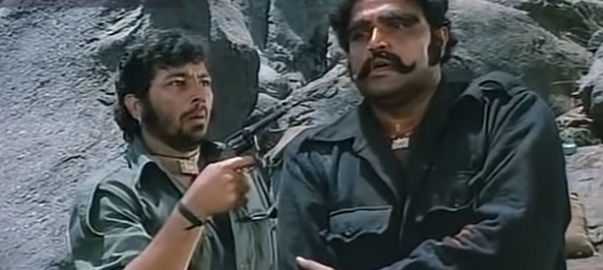
Amjad Khan in Sholay 

Why Loving Gabbar Singh Was a Problem
Varma believes the iconic villain Gabbar Singh, played memorably by Amjad Khan in Sholay (1975), wasn’t meant to be loved. He states, “We are supposed to hate the villain, not admire him.” According to Varma, the audience’s fascination with Gabbar signals a narrative failure. When evil becomes celebratory in cinema, does the story lose moral grounding? Food for thought, though. 

The Wild Sholay Sequel That Never Happened                      Varma revealed a never-before-heard plotline pitched to him by Sasha Sippy, head of Sholay Media & Entertainment and nephew of Sholay director Ramesh Sippy. 

In this proposed sequel: Gabbar and Helen’s dancer character consummate their relationship post the Mehbooba song, leading to the birth of Junior Gabbar. Veeru and Basanti return to Ramgarh for Radha but are kidnapped by Junior Gabbar.Veeru and Basanti's children then journey to rescue them! 

How this story would believably unfold on screen, considering the timelines and assumed biological growth of various characters seems to be the least of the problems. 

Komal Nahta laughs uncontrollably, while Varma swears the pitch was genuine. This far-fetched narrative, says Varma, was one of the reasons he eventually helmed the much-criticized Aag.


What Went Wrong with Ram Gopal Varma Ki Aag?           

Varma attributes the failure of Aag to two key decisions:

Creative Constraints from Sasha Sippy's Pitch: Sasha Sippy's Sholay sequel plot narration, certainly killed RGV's interest. Clearly it was plot that RGV didn't expect to unfold. Varma also surely, didn't have creative control to make his own Sholay version for Sholay Entertainment.   

The Gabbar Poster Mishap: The feedback on a graphic artist's impression of Amitabh Bachchan as Gabbar Singh (renamed Babban due to copyright issues), convinced Varma into a full remake path. The rest, as they do not say often, was disaster. 

Despite the backlash on Aag, Varma laughs at his failures in the interview.

Cinema is Not About Logic, Says Varma                        Interestingly, Varma argues that story logic often disrupts cinematic emotion. He recalls audience mumbling about a brief subplot in Bhoot (2003) that distracted from the horror. According to him, “Story is not the core of a film—emotional highs are.”

He supports this with a scene from Satya (1998): When police are tipped off about Satya’s presence in a theatre, they recklessly announce it, causing chaos. Logically, they should have quietly arrested him. 

Varma admits this was a lapse, but it served the film’s drama. Only background score composer Sandeep Chowta questioned this logic back then—yet the audience never did. 

The Curious Case of Veerappan (2016)

I ended up watching Veerapan after the interview. Varma’s Veerappan shows flashes of brilliance. The lead actor’s uncanny resemblance to the real-life smuggler stands out, though Lisa Ray’s vengeful character borders on theatrical. The score often overemphasizes tension. 

Some of the camera placements and angles are creatively superb. While not a full return to form, the film proves Varma still has cinematic instincts that could spark a comeback.

Is a Ram Gopal Varma Comeback Possible?

In the podcast, Varma hints at working on a “big film” but withholds details. He maintains that commercial success doesn’t influence his decisions, and spontaneity remains central to his filmmaking. While critics and fans may be skeptical, the hope for a true RGV resurgence lingers.

Despite his eccentric public persona, social media antics, and controversial statements, there’s still an audience eager to see Varma reclaim his storytelling prowess.

Final Thoughts: Still Rooting for Ram Gopal Varma

Ram Gopal Varma once reshaped Indian cinema with gritty realism and emotional intensity. Today, even as his films falter, the filmmaker's insights and self-awareness are compelling. Perhaps all it takes is one well-crafted, emotionally resonant story—logic be damned—for Varma to return to form.

Ram Gopal Varma's Satya (1998)

Monday, March 6, 2023

Sholay and the Western Genre: Exploring the Western influences in the film


Sholay is a classic Indian film released in 1975 that has become a cultural icon in India. The film, directed by Ramesh Sippy, was heavily influenced by the Western genre and transformed the Indian film industry by introducing a new style of storytelling and filmmaking.

Cowboys, gun battles, wild wild west: The Western genre has been a popular and enduring genre in cinema history, characterized by its depictions of the American West, cowboys, outlaws, and lawmen. Sholay incorporated several elements of the Western genre, including its setting in a small village in the Indian state of Uttar Pradesh, a story of revenge, and the portrayal of larger-than-life characters.

Nowhere do writers Salim-Javed copy any situation or scene for the Hollywood or the Sergio Leone classic westerns. The family execution scene has an echo from Leone's Once Upon a Time in the West (1968), that's it for any direct influences. The westerns impact is widely visible in the cinematography and minimal use of background score in key action sequences. 

The anti-hero: One of the most significant Western influences in Sholay was its use of the "anti-hero" archetype. In Western films, anti-heroes are often portrayed as flawed characters who possess qualities that make them less than heroic, such as greed or a lack of morality. Sholay's character of Gabbar Singh, played by Amjad Khan, was an anti-hero who was ruthless, violent, and lacked any redeeming qualities. Gabbar Singh was unlike any villain that Indian cinema had seen before, and his portrayal was groundbreaking in the context of Indian cinema.

Buddy system: Another Western influence in Sholay was its use of the "buddy film" trope. In Western films, the buddy film is a popular subgenre that typically features two protagonists who form an unlikely bond and work together to achieve a common goal. Sholay's protagonists, Veeru and Jai, played by Dharmendra and Amitabh Bachchan, respectively, were two very different characters who became friends and worked together to defeat the film's antagonist.

R.D. Burman: Sholay's use of music was also heavily influenced by Western cinema. Western films often use music to enhance the mood and atmosphere of a scene, and Sholay was no different. The film's iconic soundtrack, composed by R.D. Burman, was a fusion of Indian classical music and Western-inspired tunes. 

The use of music in Sholay was revolutionary and set a new standard for Indian cinema. My favourite is the opening credits score, that is at once western yet organically Indian. 

Sholay was a game-changer for the Indian film industry. It transformed the way Indian filmmakers approached storytelling and introduced a new level of technical excellence to Indian cinema. The film's success paved the way for a new era of Hindi cinema, and its influence can still be seen in Indian films today.

Friday, March 3, 2023

Sholay: A Cultural Phenomenon: The cultural impact of the film on Indian cinema and society

Sholay, a 1975 Indian action-adventure film, directed by Ramesh Sippy and produced by his father G. P. Sippy, is not only a cinematic masterpiece but a cultural phenomenon that has had an immense impact on Indian cinema and society. 

The film features a stellar ensemble cast, including Dharmendra, Amitabh Bachchan, Sanjeev Kumar, Hema Malini, Jaya Bachchan, and Amjad Khan, who brought to life some of the most iconic characters in Indian cinema history. Since its release, Sholay has been re-released several times, and its popularity continues to grow, making it one of the greatest Indian films ever made.

Sholay is not just a film, but a cultural phenomenon that has had an enormous impact on Indian cinema and society.

Released on 15 August 1975, Sholay was an instant box office success, becoming the highest-grossing Indian film of all time. The film's popularity continued to grow over the years, and it is still considered one of the greatest Indian films ever made. Sholay has been re-released several times, and it continues to draw audiences even today.

Memorable characters: One of the main reasons for Sholay's enduring popularity is its iconic characters. Each of the characters in the film is unique and memorable, from the heroic Jai and Veeru to the villainous Gabbar Singh. The film's dialogues have become part of the Indian lexicon, with lines like "Kitne aadmi the?" and "Yeh haath mujhe de de Thakur" being quoted and parodied in popular culture.

Grime and grittinessSholay also broke new ground in Indian cinema by introducing a more gritty, realistic style of filmmaking. The film's portrayal of violence and its depiction of the harsh realities of life in rural India was a departure from the escapist, romantic films that were popular at the time. Sholay's success paved the way for a new generation of filmmakers to explore more socially relevant themes in their films.

Breaking social taboos: Another reason for Sholay's cultural impact is the way it addressed issues of gender and class. The film's portrayal of the relationship between the upper-class Thakur and the lower-caste villagers was groundbreaking for its time. Similarly, the film's female characters were portrayed as strong and independent, challenging the traditional gender roles of Indian society.

Music, costumesSholay also had a significant impact on Indian fashion and style. The film's costumes, particularly Hema Malini's iconic white outfit, became hugely popular, and the film's music, composed by R. D. Burman, is still regarded as a classic.

Pop culture and Sholay: In addition to its impact on Indian cinema and society, Sholay has also influenced international pop culture. The film has been referenced and parodied in films and TV shows around the world, from Quentin Tarantino's Kill Bill to The Simpsons.

Sholay, the enduring classic: In conclusion, Sholay is a cultural phenomenon that has had an enormous impact on Indian cinema and society. Its iconic characters, realistic style, and portrayal of gender and class issues have made it a timeless classic. Sholay's enduring popularity is a testament to its relevance and importance, almost five decades since its release.

Thursday, July 9, 2020

Goodbye Soorma Bhopali: Comedian Jagdeep is no more


Soorma Bhopali will no longer be swindling the locals on the price of timber or conspiring with Jai and Veeru to arrange their arrest, and pocket half of the reward money.

He will probably be now telling tall tales of how he caught and bashed up Jai and Veeru barehanded...on the other side.

Syed Ishtiaq Ahmed Jafri, known by his screen name Jagdeep (1939-2020) passed away late at his home on July 8th, 2020. He was 81.

He is survived by his multi-talented sons, Javed Jaafery, Naved Jaafery, and daughter Muskaan Jaffrey, among others.

Jagdeep joins Samba, Kaalia, Thakur, Gabbar, RD Burman, Anand Bakshi and others in Sholay heaven. 


Role of a lifetime
Jagdeep reportedly starred in a staggering 400 films, and Soorma Bhopali remains his most memorable character.

I had the privilege of catching Sholay in 3D on the big screen, and back then I had mentioned just how good Jagdeep and Asrani were in their roles, providing comic relief before it got all macho and gun-mad.


Reel versus real life 
Jagdeep is said to have picked up the accent and unique speech nuances from the real Soorma Bhopali.

As luck would have it, he had a chance encounter with the real Bhopali a few years after Sholay became a mega success.

The character's enduring appeal was such that Jagdeep played the character again in Soorma Bhopali (1988), featuring guest acts by Dharmendra and Amitabh Bachchan.


The film journey 
Jagdeep debuted as a child artist, just like the recently deceased choreographer Saroj Khan, in the Ashok Kumar starring Afsana (1951).

He did many bits roles over the next three decades before achieving screen immortality with Sholay.

Another famous notable act was playing Bankelal Bhopali, Prem's (Salman Khan) hapless father in Rajkumar Santoshi's hilarious iconic comedy Andaz Apna Apna (1994).


Santoshi's China Gate (1998), inspired take on Sholay, Seven Samurai (1954) and The Magnificent Seven (1960), featured Jagdeep as Subedar Ramaiyah, among the ensemble cast.


Jagdeep may have passed on, but Soorma Bhopali will remain timeless, indelible and amazingly funny.

Thank you Soorma Bhopali for the joy and fun.

Rest in peace. 

Friday, October 4, 2019

Goodbye Kaalia: Remembering Viju Khote (1941 - 2019)


(What will happen to you, Kaalia?) 


"Sardar, maine aap ka namak khaya hai.
(Boss, I have been loyal to you. ("Have eaten your salt (namak)" implies loyalty.)

"Toh ab goli kha...
(Then eat a bullet now..)

(Gabbar presses the gun against Kaalia's forehead and presses the trigger...)

Approximately 44-odd years since he was shot dead onscreen playing henchman Kaalia to lunatic dacoit Gabbar Singh, veteran actor Viju Khote has finally found his peace. 

The 77-year-old actor, known to play bit roles in many Hindi and Marathi movies throughout his five-decade long career passed away yesterday due to multiple organ failure. Apart from Sambaa, Kaalia was the only other recognizable henchman from Gabbar's dacoit gang in Sholay.

Stereotyping & the death of an actor 
As it happens with many Hindi movie actors, Viju Khote was typecast to play the henchman in numerous other movies. Stereotyping an actor based on appearance and repeating a 'hit' character is a Hindi movie curse few actors emerge from and Khote couldn't either. Alas, for here was an actor capable of playing any shade, given the chance.


Galti se mistake ho gaya
Who can forget the bumbling henchman Robert in Rajkumar Santoshi's cult comedy Andaaz Apna Apna and his hilarious punchline,"Galti se mistake ho gaya." ("The mistake happened by mistake.") 

Also, watch his timing when he matches the amazing Paresh Rawal in the same movie with, "Cheene dalne ka time ho gaya sir?" ("Is it the right time to put in the sugar, sir?").


Last word: Andaaz Apna Apna sequel 
Andaaz Apna Apna director Rajkumar Santoshi spoke to the media on Khote's death, summing up Khote's unfulfilled career,"He was a fantastic actor with very good timing. No one could’ve played Robert like he did. He would drop by whenever he was in Juhu. I’m currently writing the second part of Andaz Apna Apna and had a role for him in mind. He didn’t get the roles he deserved.” 

Rest in peace Viju Khote, and thank you for Kaalia, Robert and many other wonderful characters. 

Sholay fans video recommendation!
Sholay fans, additional recommended viewing - Viju Khote's delightful cameo as Kaalia in Atithi Tum Kab Jaoge? (2010), watch out for his chemistry with Paresh Rawal in this Ajay Devgn-Konkana Sen Sharma comedy.   


Saturday, October 24, 2015

Before Sholay: Notable Amitabh Bachchan films (1969 - 1975): Deewaar


Amitabh Bachchan's consistent superlative performances even as film quality dipped through the late seventies and all through the eighties is another story. But among those rare bunch of cinematic triumphs that Amitabh Bachchan will be remembered for, Deewar stands out, colossal.

A trade union leader is forced to go on the run, so that his family's life is not endangered. To make ends meet, his stranded wife and children rough it out on ruthless, heartless Mumbai streets. While one son Ravi, grows up to be righteous, Vijay's quiet rebellion silently simmers within, seeking outlet.

Deewaar was released on January 24, 1975, barely seven months before Sholay. Even then, 'two brothers-either side of the law-confrontation' was not a new theme to Hindi films.Notably, Mother India (1957) and Ganga Jamuna (1961) had similar main plots.The former gave the mother centre stage, the latter focused on fate making a dacoit vs police officer standoff between siblings.

Intense, memorable drama
What makes Deewaar a compelling watch, 40 years on, is its urban landscape of inequality, unemployment, poverty, dissatisfaction and greed for power.That lopsided landscape still rots our cities, more than ever. Salim-Javed are in top form here. Their studied yet entertaining dialogues still stand the test of time. 

Amitabh Bachchan as Vijay is the mapped face of an endless generation, for whom money is the ultimate push to buy happiness, if only in vain. Shashi Kapoor as Ravi is as relevant in his principled, straight path. But we fall for Vijay, oh so easily. His turbulence to not make peace with the past, to constantly conflict it with the present, echoes deep within. For all the bravado, Vijay is a vulnerable caged bird, in dire need of solace and love. 

The female roles still feel modern-day, especially Parveen Babi's independent woman. To a mitigated extent, Neetu Singh's carefree girl is cool too. Nirupa Roy's mother of all mothers, represents a timeless moral, rooted core. An iconic Hindi film classic you can't miss

Saturday, June 13, 2015

Sholay Specials: The 2015 Zee Classic Sholay TV Ad

As much as Sholay repeatedly, untiringly features in popular Indian media till date, the Zee Classic TV channel ad was still a surprise. Energy tonic, vitamin capsule and magically revitalizing tea came to my mind during the initial snatches. Anything to do with Sholay seemed least likely. You may read about the channel's ad campaign here.